

A low vehicle-shipping quote can turn into an expensive surprise when charges are left out of the headline price. A no hidden fees vehicle transport quote should explain what the price includes and identify any surcharges. The cost depends on the route, vehicle, service and pickup and delivery details. GO DISPATCH coordinates auto transport with carriers, with the quote based on your shipment details.
It’s reasonable to want a clear total before arranging transport. But a lower quote may cover a different service or omit charges, so the first figure you see may not tell the whole story.
Here, you’ll learn how fuel surcharges can affect a quote, what to look for in a price breakdown, why routes can affect transport arrangements and how a very low quote can lead to changes. You’ll also see which shipment details to provide for a more accurate quote and clearer planning.
Key Takeaways
- Ask for a written quote that separates the base rate from fuel surcharges and other likely fees.
- Share accurate vehicle and pickup details to help make the estimate reflect the service you need.
- Factor in route accessibility and carrier availability, as well as distance, when assessing a quote.
- Look beyond a low headline price: check what the service includes and what could change the final cost.
1. Fuel surcharges
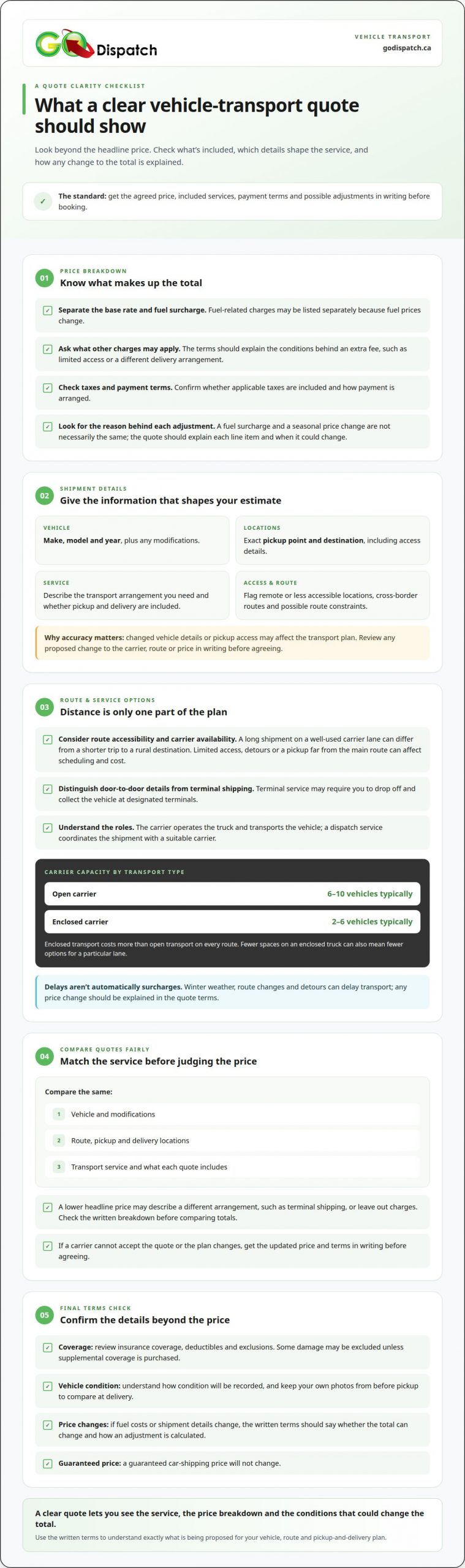
Fuel prices change, so a transport quote may list a fuel surcharge separately. A written quote should explain what the total covers and identify any additional charges that apply. Ask for a breakdown showing the price and any surcharges, so you can understand the proposed cost before booking.
Fuel-related charges and seasonal price changes are not necessarily the same thing. For example, a quote might list a fuel surcharge separately rather than include it in a seasonal adjustment. Look for an explanation of each line item and the circumstances that could change it. Clear terms help you understand what a price adjustment relates to.
A transport quote may list a fuel surcharge separately because fuel prices change. Quotes can also describe different service arrangements, so check whether pickup and delivery are included or whether you would need to drop off and collect the vehicle at designated terminals. The written quote should clearly state the service and whether applicable taxes are included.
Remote or less accessible pickup and delivery locations can affect the transport quote. Cross-border routes also need to be described clearly, including the pickup point and destination, so the route and service are accurately represented. Winter weather, route changes and detours can delay transport, but that doesn’t automatically mean a separate surcharge applies. Any price change should be explained in the quote terms.
The price for your vehicle transport depends on fuel costs, route accessibility, pickup and delivery details, and the service selected. Use a quote for your specific case to see the exact figure and how any surcharge is handled. If fuel costs change after the quote, the written terms should explain whether that affects the total and how the adjustment is calculated.
2. Vehicle transport pricing and all-in quotes
A written quote should make it easy to understand what the price covers. Review the transport service, price breakdown, payment terms and any charges that may apply. If a charge depends on a particular condition, such as limited access or a different delivery arrangement, the terms should explain when it applies. Clear details help you assess whether a no-hidden-fees vehicle transport quote is genuinely clear.
A lower quote may reflect a different transport arrangement, not simply a better price. For example, terminal shipping may require you to drop off and collect the vehicle at designated terminals. A quote that a carrier cannot accept may also need to be revised. If the carrier or plan changes, get the updated terms in writing before agreeing.
Before booking, review the written terms for the agreed price, included services, payment arrangements and any conditions that could change the total. Pay particular attention to extra charges and your responsibilities. For no-hidden-fees vehicle transport, make sure you understand what the quote covers and how any possible adjustments are explained.
To get an all-inclusive quote, provide the vehicle’s make, model, year, modifications, pickup location and destination. Describe the service you need and ask for written terms that explain what could change the final price. A guaranteed car-shipping price will not change.
Insurance coverage and deductibles vary between shipments. The quote or transport terms should explain coverage, deductibles and exclusions. Some damage may be excluded unless supplemental coverage is purchased. Review those terms alongside the price so you understand what protection the quote describes.
For help coordinating the shipment details behind a no-hidden-fees vehicle transport quote, use vehicle transport quote information as a starting point.
3. Distance, route, and carrier-lane pricing
Distance matters, but the route also shapes a vehicle transport quote. A long shipment on a well-used carrier lane can differ from a shorter trip to a rural destination. Limited access, extra detours or a pickup far from the main route can affect scheduling and transport costs. A terminal option may change the plan by requiring drop-off and collection at designated locations.
A carrier and a dispatch service have different roles. The carrier operates the truck and transports the vehicle, while a dispatch service coordinates the shipment with a suitable carrier. Go Dispatch provides one-stop transport dispatching, coordinating carrier selection, scheduling and delivery. This brings the logistics together without requiring you to arrange each step yourself.
Capacity is another route factor. Open carriers typically carry six to ten vehicles, while enclosed carriers typically carry two to six. Fewer spaces on an enclosed truck can mean fewer available options for a particular lane. Enclosed transport also costs more than open transport on every route, so the protection level affects the quote as well as distance.
The carrier’s identity, transport terms and insurance details are important parts of understanding a shipment. Review how the vehicle’s condition will be recorded and keep your own photos from before pickup for comparison at delivery. These details clarify the arrangement beyond the headline price.
A shipment plan may need to change if the vehicle details, pickup access or other information differ from what was provided. For example, a pickup location with limited access may affect the transport plan. Share the make, model, modifications, pickup and delivery locations accurately, and review any proposed changes to the carrier, route or price in writing before agreeing.
4. Comparing transparent and lowball pricing
Compare quotes for the same vehicle, route, pickup and delivery locations, and service. A lower price may cover terminal shipping, while another quote may describe a different delivery arrangement. Compare what each quote actually includes before assessing the total. A clear written breakdown makes differences easier to spot.
Look for charges or conditions that could affect the price after booking. The written terms should explain the quoted service, payment arrangements and what could change the total. For example, clarify how a change to the pickup location or route would be handled. Do not accept an unexplained adjustment: review the reason and revised terms first.
A very low quote may need to change if a carrier cannot accept the shipment at that price. That could mean a revised booking or transport plan. Treat any new charge as a change to the original agreement: ask for the reason and revised terms in writing before accepting. A low initial figure alone does not establish that the proposed arrangement is available.
Pay attention to time pressure, too. A car-shipping price valid for only 10 minutes is a pressure tactic, not proof that the quote is transparent. Take time to review the service level, pickup window, delivery locations, insurance details and payment schedule. If the quote omits a key detail, its total may be hard to compare fairly with another offer.
Use the same checklist for every quote: vehicle details, route, pickup and delivery method, included charges, payment terms and possible price changes. Then compare the written terms, not just the headline amount. Clear documentation gives you a record if the carrier, timing or route changes. For help arranging transport with clear shipment details, request a vehicle transport quote.
GO DISPATCH
GO DISPATCH helps coordinate vehicle transport by finding a suitable auto carrier and managing the logistics. Its ONE-STOP TRANSPORT DISPATCHING SERVICE handles carrier selection, scheduling and delivery for cars, trucks, SUVs, vans and more. If you are comparing quotes or arranging a vehicle move, this service brings the transport details together.
Share the vehicle details, pickup and delivery locations, and transport requirements when requesting a quote. This helps Go Dispatch coordinate a plan around the actual shipment and explain the arrangement. The one-stop service manages the logistics, so you do not have to coordinate each step on your own.
For help planning your vehicle transport, contact GO DISPATCH.
Make your next move with a clear plan
Make the transport handover part of your moving plan. Decide when the vehicle will be ready, where it should be collected and who will be available at delivery. These details provide a practical starting point for coordinating the shipment.
If your priority is no-hidden-fees vehicle transport, keep the written quote and terms with your moving plan. If your timing or locations change, share the update promptly so the transport arrangements can be reviewed. Keeping the details together makes it easier to follow the agreed plan.
For no hidden fees vehicle transport, make the next step a conversation about your shipment’s needs. GO DISPATCH can help coordinate the transport logistics. Contact GO DISPATCH to discuss your transport and move forward with a clear plan.
Frequently Asked Questions
How much does it cost to transport a car?
The quote depends on the vehicle, route, pickup and delivery details, and transport service. A standard vehicle travelling between accessible locations may involve different arrangements from a modified vehicle or one requiring a different service. Request a quote using the vehicle’s make, model, year and condition, along with the shipment details, to get a price for your specific move.
Do they specialize in vehicles, or is it a general freight add-on?
GO DISPATCH specializes in auto transport dispatching. It coordinates with auto carriers to arrange vehicle hauling, rather than treating a car as a general freight add-on. That distinction matters when a shipment needs vehicle-specific carrier selection and delivery scheduling. For example, moving a car between provinces requires a transport plan built around the vehicle, its pickup and delivery points, and the carrier handling the shipment.
How far in advance do I need to book?
Book as early as your move plans allow, especially if you need an enclosed carrier. Enclosed carriers are less available than open carriers, so arranging transport earlier gives more room to coordinate a suitable option. Share your preferred pickup window and destination when planning. If your dates are flexible, say so, since a wider scheduling window can make carrier coordination easier.
Is there photo documentation at pickup and delivery?
Photo records are a useful way to document a vehicle’s condition, but don’t assume they’re automatically supplied as part of every shipment. Before handover, photograph the exterior from several angles and capture any existing marks clearly. Keep the images available during delivery, then compare the vehicle’s condition before completing the handover. Clear records can help describe any difference you notice.
What are hidden fees, and why do they exist?
A fee may feel hidden when it was not explained in the quote or before booking. Charges can relate to changes in shipment details or transport arrangements, and a fuel surcharge may appear as a separate line item. Ask for an explanation of any added charge and review revised terms in writing before agreeing.
What is included in a vehicle transport quote in Canada?
A Canadian vehicle transport quote should identify the transport service, base rate, likely surcharges and any conditions that could change the total. It should also make the pickup and delivery arrangement clear, including whether terminals are involved. Review payment terms and insurance coverage, deductibles and exclusions as well. For example, clarify whether the quote reflects open or enclosed transport before comparing it with another option.