
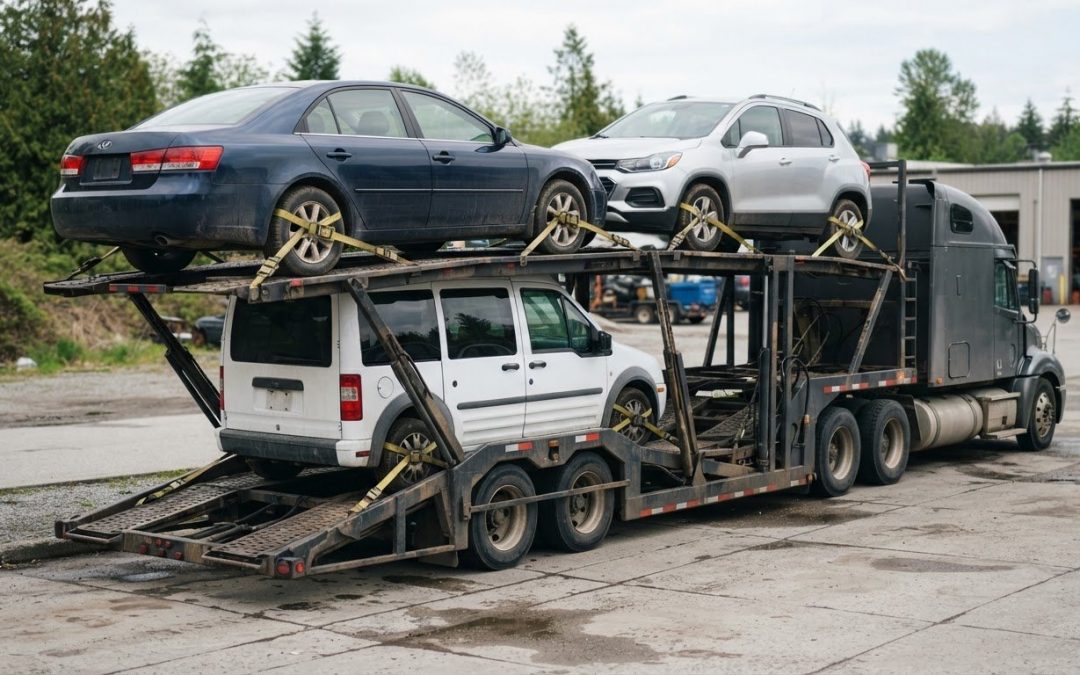
A vehicle move rarely fits a one-size-fits-all plan. Custom vehicle hauling solutions can be shaped around cars, trucks, SUVs, vans, and recreation gear such as ATVs, kayaks, and snowmobiles. The vehicle’s size, loading needs, and destination all influence how the haul is arranged.
It’s reasonable to want clear answers before coordinating a move, especially when timing and several types of equipment are involved. This guide explains what kinds of vehicles and recreation gear can be hauled, what affects scheduling, and whether transport support is available around the clock.
You’ll also learn which industries rely on vehicle hauling and how dispatching can simplify the logistics. With the key considerations in view, it’s easier to understand what a transport plan needs to cover and where to turn for help with cars, trucks, SUVs, or vans.
Key Takeaways
- Match the hauling plan to the vehicle’s size, loading needs, and destination so the logistics fit the move.
- Understand what to clarify about scheduling before relying on round-the-clock transport support.
- Identify how vehicle transport can fit different industries’ operational and equipment-moving needs.
- See how one-stop dispatching can coordinate transport logistics when you need help arranging a move.
Car, truck, ATV, kayak, and snowmobile transport
Vehicle transport planning starts with the load, its condition, and the route. Those details shape loading, scheduling, and the equipment needed for the move.
Vehicle and equipment transport
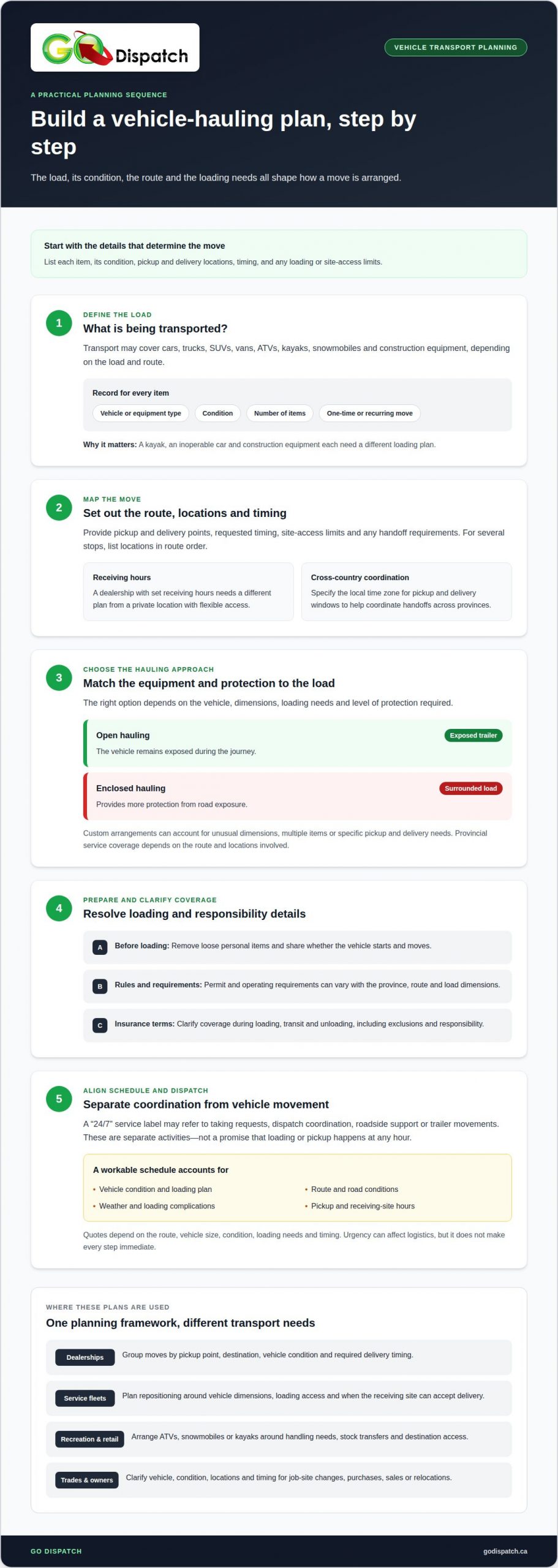
Transport can cover cars, trucks, ATVs, kayaks, snowmobiles, and construction equipment, depending on the load and route. A kayak needs a different loading plan than an inoperable car or a piece of construction equipment. Private owners, dealerships, and trades may all need vehicle moves. List each item, its condition, and pickup and delivery locations when arranging transport.
Scheduled and inoperable vehicle moves
Scheduled transport suits recurring dealership or business moves; one-time transport can meet an individual sale or relocation. An inoperable vehicle needs a plan that accounts for its condition and how it can be loaded. Quotes depend on the route, vehicle size, condition, loading needs, and timing. Road conditions, weather, and loading complications can affect schedules. A reliable arrangement clearly sets out the route, timing, and transport responsibilities.
Hauling options and custom solutions
Open hauling carries vehicles on an exposed trailer, while enclosed hauling surrounds the load. Enclosed transport offers more protection from road exposure; open transport leaves the vehicle exposed during the journey. The right option depends on the vehicle and the protection needed. Custom vehicle hauling solutions can account for unusual dimensions, multiple items, or specific pickup and delivery needs. Provincial service coverage depends on the route and the locations involved.
Preparation and coverage requirements
Before loading, remove loose personal items and share details about the vehicle’s condition, including whether it starts and moves. Permit and operating requirements can vary with the province, route, and load dimensions, so the transport plan needs to account for applicable rules. Insurance terms should explain coverage during loading, transit, and unloading, including exclusions and responsibility. These details help clarify the move before dispatch.
24/7 Service availability
A “24/7” label can describe different parts of vehicle transport. It may refer to taking requests, dispatch coordination, roadside support, or trailer movements. Those are separate activities, not a promise that loading or pickup happens at any hour. For example, a request received overnight may be handled differently from a vehicle scheduled for daytime loading.
For a useful schedule, distinguish the requested timing from the planned pickup and delivery windows. Record the pickup location, destination, vehicle type, and any site access limits. A dealership with set receiving hours needs a different plan from a private location with flexible access. These details help align transport timing with the people and locations involved.
For cross-country coordination, specify the local time zone for pickup and delivery windows. A morning window in one province may fall later elsewhere, which can affect handoffs and receiving arrangements. If a move involves several locations, list them in order so dispatch can plan around the full route.
Urgency can affect the logistics, but it does not make every step immediate. Vehicle condition, loading access, route, weather, and the receiving site’s hours all shape the workable schedule. For example, a vehicle that does not run may require a suitable loading plan before collection. A clear request separates dispatch coordination from the actual movement of the vehicle.
When asking about timing, distinguish the time a transport request is handled from the planned pickup and delivery windows. Provide the requested dates or timing, locations, vehicle details, and any handoff requirements. This gives dispatch the information needed to coordinate the move and set clear expectations.
Industries and trades served
Auto dealerships may need vehicles moved between locations, from an acquisition point to a sales lot, or to a customer. For cars, trucks, SUVs, and vans, group requests by pickup location, destination, vehicle condition, and required delivery timing. These details help shape a transport plan around inventory movement rather than treating each vehicle as an unrelated task.
Businesses that operate service fleets also use vehicle transport when vehicles need repositioning. For example, a contractor may move a work truck or van between a central depot and a project area. The useful planning details include vehicle dimensions, whether it runs, where it can be loaded, and when the receiving site can accept delivery. Fleet capacity and the number of locations involved affect coordination.
Recreation and powersports businesses may arrange moves for ATVs and snowmobiles, while outdoor retailers may need kayaks transported to another location. These loads differ in shape and handling needs from a passenger car. A retailer preparing for seasonal inventory, for instance, can plan pickup and delivery around stock transfers, storage access, and the destination’s ability to receive the item.
Trades with vehicles at multiple job sites may need a truck or van moved when crews or assignments change. Organize the request by listing each vehicle, its current location, its destination, and any access limits at either site. That gives dispatch a clear picture of the move and helps coordinate several vehicles as one planned shipment where appropriate.
Individual owners also arrange transport for a vehicle purchase, relocation, or sale. Their needs differ from a dealership’s recurring inventory moves, but the same basic details matter: vehicle type, condition, pickup and delivery points, and timing. Identifying whether the move is a one-time request or part of regular fleet operations helps shape the transport plan for the business or owner.
What custom vehicle hauling solutions are available in Canada?
In Canada, custom vehicle hauling solutions can be organized around the vehicle, route, timing, and loading needs. A move might involve one car between locations, several trucks between business sites, or a van heading to a new work site. Defining the load and destination first helps dispatch coordinate the transport arrangement.
For a single vehicle, the plan centres on its condition, dimensions, pickup access, and delivery location. A business moving several vehicles can group them by destination or arrange separate pickups. For example, a dealership transferring cars to another lot needs a different dispatch plan from an owner arranging a one-time relocation.
Route details matter for transport across Canada. A city-centre pickup may involve different access and timing considerations from a rural property or industrial yard. Provide the origin and destination, preferred timing, vehicle type, and any loading constraints. For a move involving several locations, list each stop in sequence so dispatch can plan around the full route.
Custom arrangements can reflect whether transport is a one-time move or part of recurring operations. A trades business shifting a truck between job sites may need a repeatable process, while a private vehicle sale calls for a single planned transfer. Vehicle condition matters too: a unit that cannot move under its own power needs a loading plan suited to its condition.
To compare transport arrangements, outline the move in four parts: the vehicle or load, its condition, the pickup and delivery points, and the timing. Then identify special access needs, such as a restricted entrance or limited receiving hours. These details give dispatch a practical basis for coordinating transport. The right arrangement addresses the actual load and route instead of assuming every move follows the same plan.
GO DISPATCH
GO DISPATCH helps organize vehicle moves through Car Transport, Truck Transport, SUV and Van Transport, and One-Stop Transport Dispatching. Its dispatch service coordinates the logistics on your behalf, connecting your transport needs with suitable auto carriers. That can help simplify planning when you’re arranging a move for a personal vehicle or coordinating transport for business needs.
To describe the move, share the vehicle type, pickup and delivery locations, condition, and preferred timing. GO DISPATCH uses these details to coordinate the transport plan with an auto carrier. Contact GO DISPATCH to discuss your vehicle transport needs.
Plan your next vehicle move
A transport request is easier to coordinate when the move is clearly defined before dispatch begins. Consider what needs to move, where it needs to go, and what timing will work for pickup and delivery. These details give the planning conversation a practical starting point and help shape custom vehicle hauling solutions around the job.
If the move supports a business change, align transport timing with the handover, site access, and the vehicle’s next use. That connects the hauling plan to the work it needs to support.
GO DISPATCH transports cars, trucks, SUVs, vans, and more. Its one-stop transport dispatching service coordinates logistics with auto carriers, helping reduce the planning burden around a vehicle move. A clear outline of the job gives dispatch a practical starting point.
Whether you’re planning a personal move or coordinating vehicles for a business, take the next step when you’re ready. Contact GO DISPATCH about hauling to discuss your transport needs.
Frequently Asked Questions
How are oversized, inoperable, or modified vehicles transported?
Transport planning depends on the vehicle’s dimensions, condition, and loading requirements. Share details such as added equipment, whether it starts and rolls, and any access limits at pickup or delivery. GO DISPATCH coordinates transport for cars, trucks, SUVs, vans, and more by connecting customers with auto carriers. Clear information about an oversized or modified vehicle helps shape the dispatch plan for its move.
How do I choose a reliable Canadian vehicle hauling company?
Choose a company that clearly sets out the route, timing, and transport responsibilities, and confirms its provincial service coverage for your locations. Share the vehicle’s condition, loading needs, and pickup and delivery details so the plan fits the move.
What insurance coverage is needed for custom vehicle transport?
Confirm that the insurance terms explain coverage during loading, transit, and unloading, including exclusions and who is responsible.